
Ballast blocks new bridges — Kieldrecht Lock
60 tonnes of grouting mortar in 8 hours, more than 2 kilos per second, for the new bridges of the Kieldrecht Lock in the Port of Antwerp.
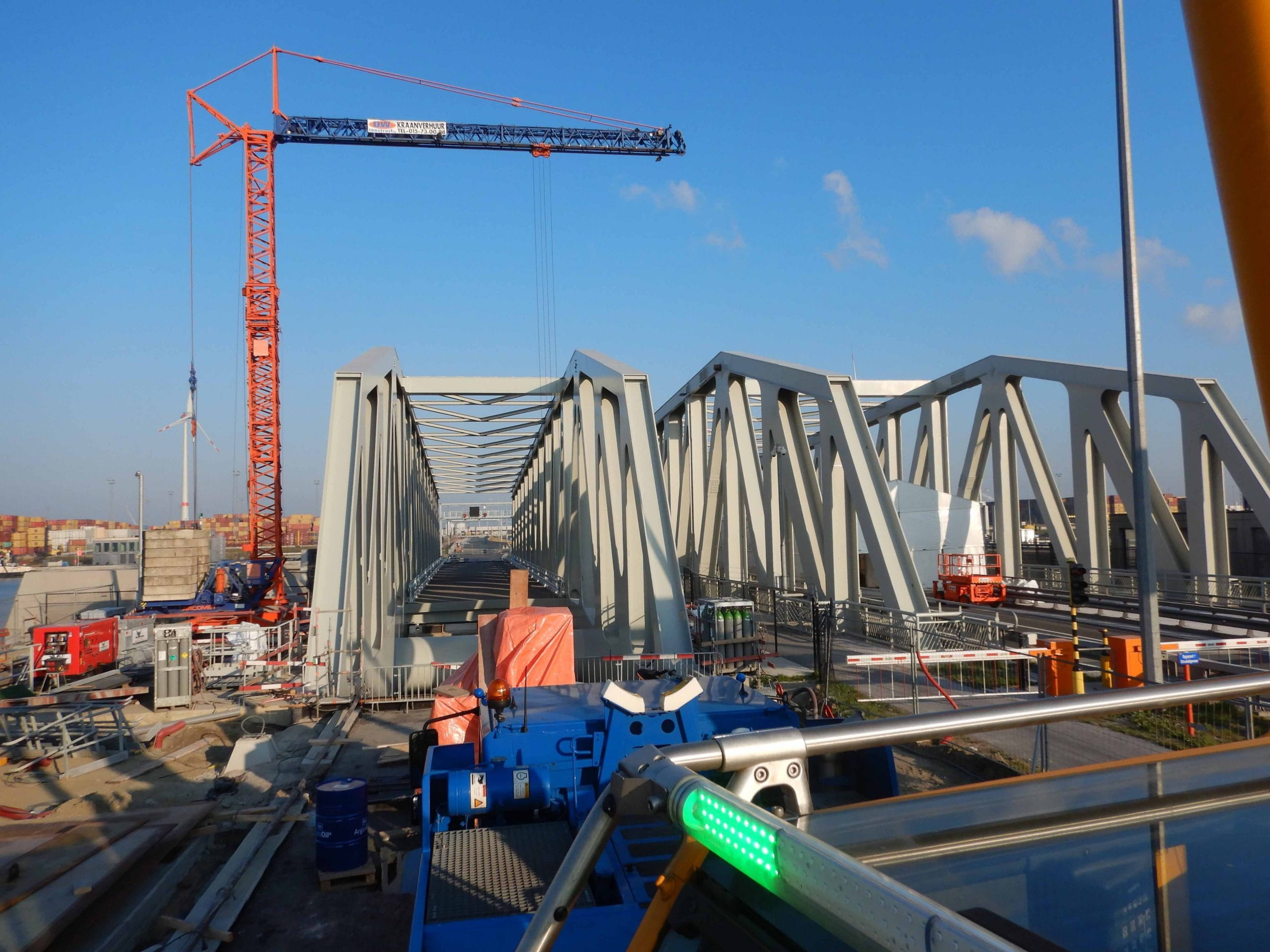
Extremely tight deadline in the Port of Antwerp
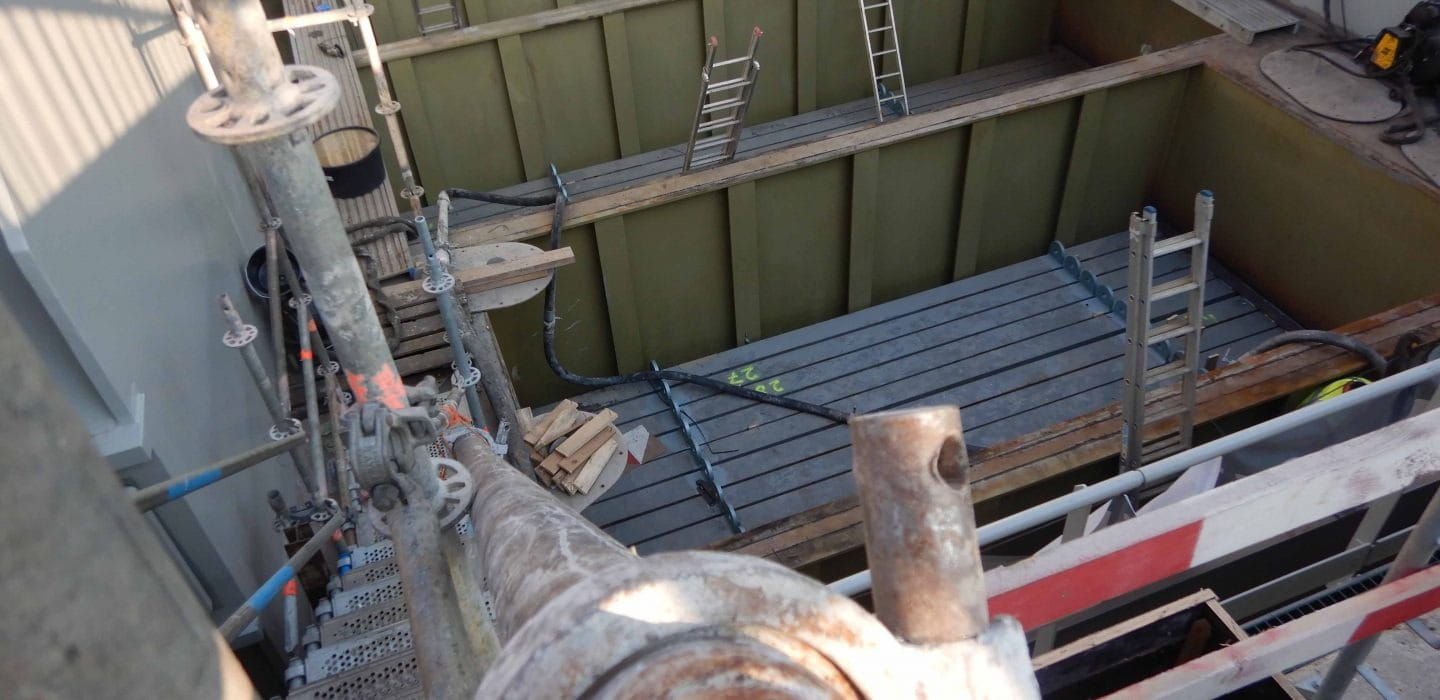
On behalf of Soton, the ballast blocks for the new bridges of the Kieldrecht Lock in the Port of Antwerp had to be filled with grouting mortar. The new bridges form an essential part of the lock infrastructure and had to be ready in time for the opening. The challenge: 60 tonnes of grouting mortar had to be processed within a time window of just 8 hours.
That is an average of more than 2 kilos per second — a pace that places extremely high demands on logistics, equipment and crew. Moreover, the grouting mortar had to meet high quality requirements: the ballast blocks must absorb the forces that the bridges exert on the structure during use. No room for mistakes, no possibility of overrun.
Maximum effort for an international project
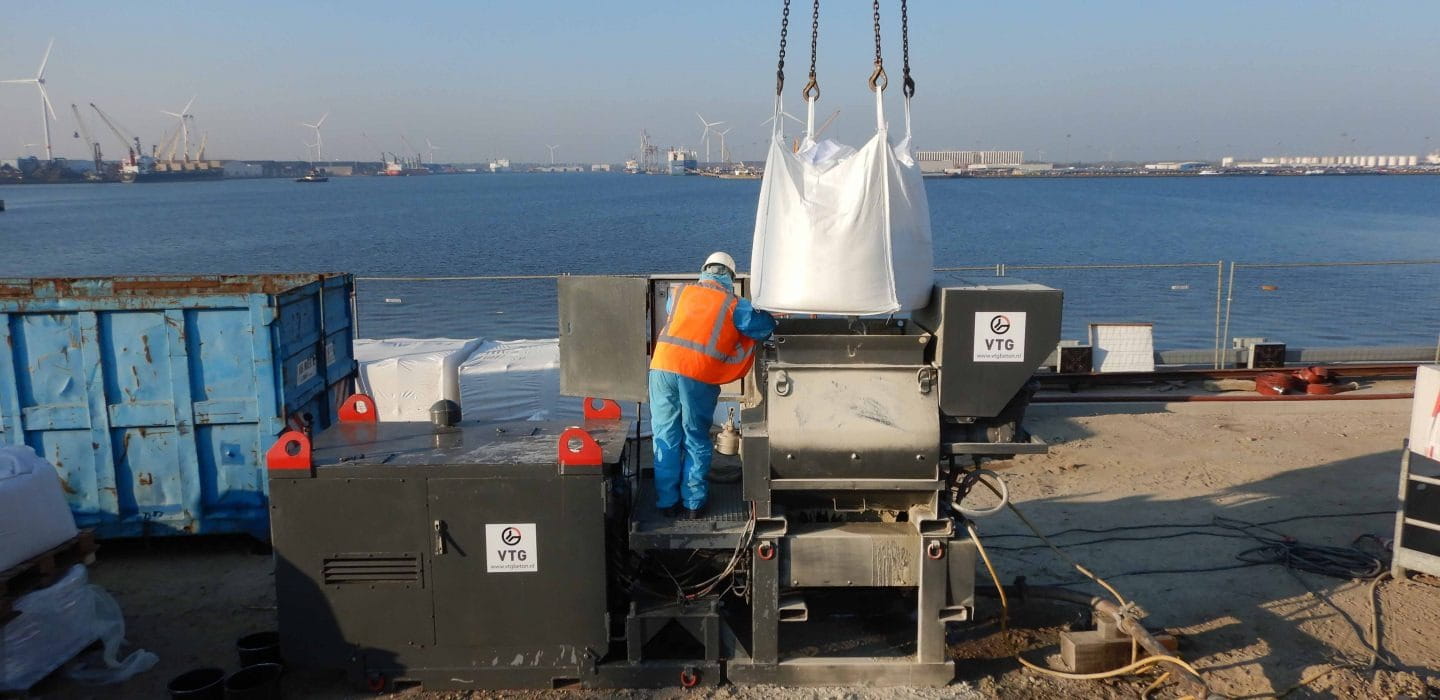
VTG mobilised the necessary equipment and personnel to the Port of Antwerp. In consultation with the client Soton, a detailed work plan was drawn up, including a tight hourly schedule per pumping location. All logistics — from the supply of the grouting mortar to the positioning of the pumps — were simulated in advance to ensure that the time window could be met.
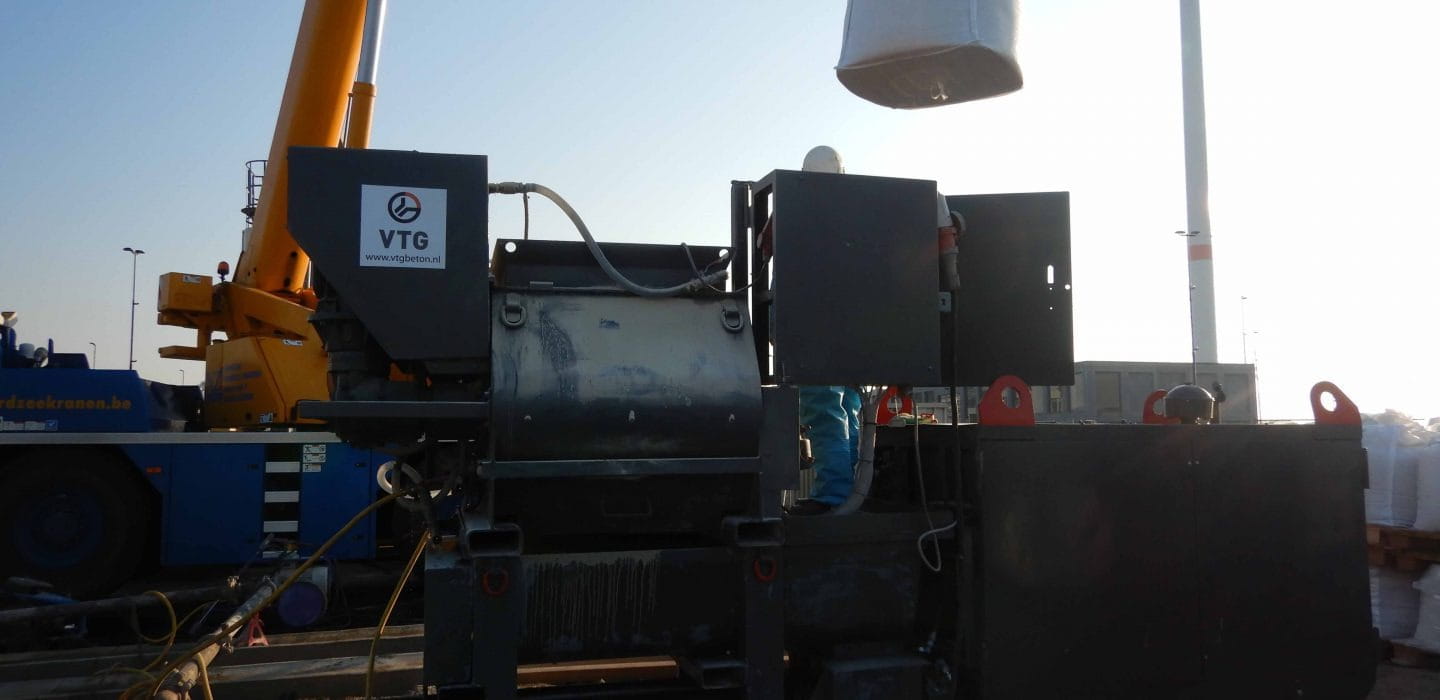
During execution, the VTG team worked in sync: several pumps ran simultaneously, operators monitored quality and logistics ensured an uninterrupted supply of material. After exactly 8 hours all ballast blocks were filled — fully on time and entirely to the client's requirements. An international achievement that confirms VTG's reputation as a reliable partner for complex projects.
60 tonnes of grouting mortar in 8 hours
Using high-quality grouting mortar and specialised concrete pumps, the ballast blocks of the new bridges were completely filled within the available time window of 8 hours. VTG deployed several pumps simultaneously, so that pouring could take place at multiple points at once. The logistics were worked out in detail: every cubic metre of grouting mortar had to be in the right place at the right moment.
On average, more than 2 kilos of grouting mortar were processed per second — an achievement that is only possible with the right equipment, the right material and an experienced team. The quality of the grouting mortar was continuously monitored to ensure that the ballast blocks met all requirements. A showcase of efficiency and technical craftsmanship in an international context.



Max van 't Geloof
Project Lead

Want to know more about this project?
Our specialists would be happy to discuss the possibilities for your project.